Sarteano: From Prehistoric Origins to the Roman Era
Prehistory and Early Human Presence
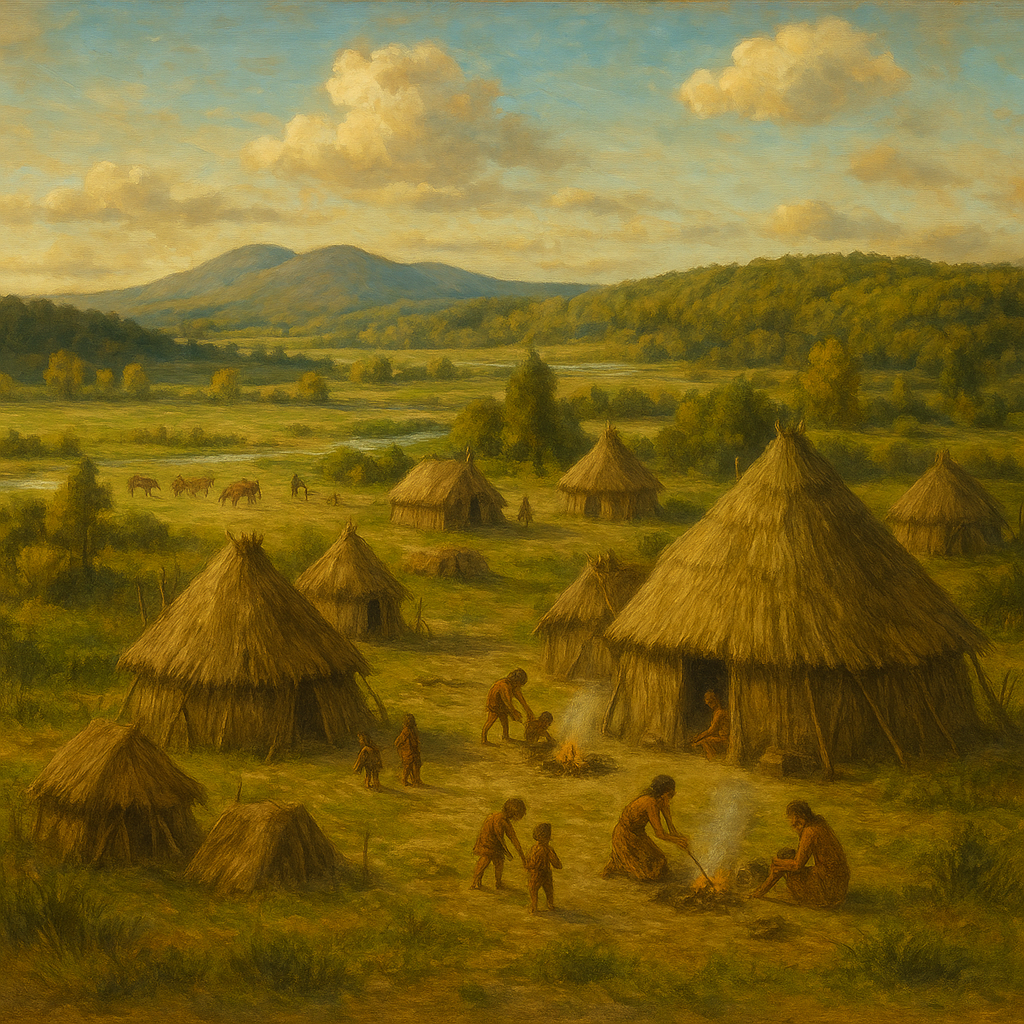
The territory of Sarteano, located between the Valdichiana and the Val d’Orcia in what is now southern Tuscany, boasts a very ancient human presence. Archaeological evidence indicates continuous settlement since the Neolithic period.
In particular, the “Grotta dell’Orso” (on Mount Cetona) is a prehistoric site of great importance for the area, with traces of human activity dating back to the Neolithic. Another significant site from the Bronze Age is the “Buca del Rospo” cave, which has yielded artifacts from that era. These sites confirm that the Sarteano area was inhabited long before the emergence of the Etruscan civilization.
The Etruscan Period (9th–1st century BCE)
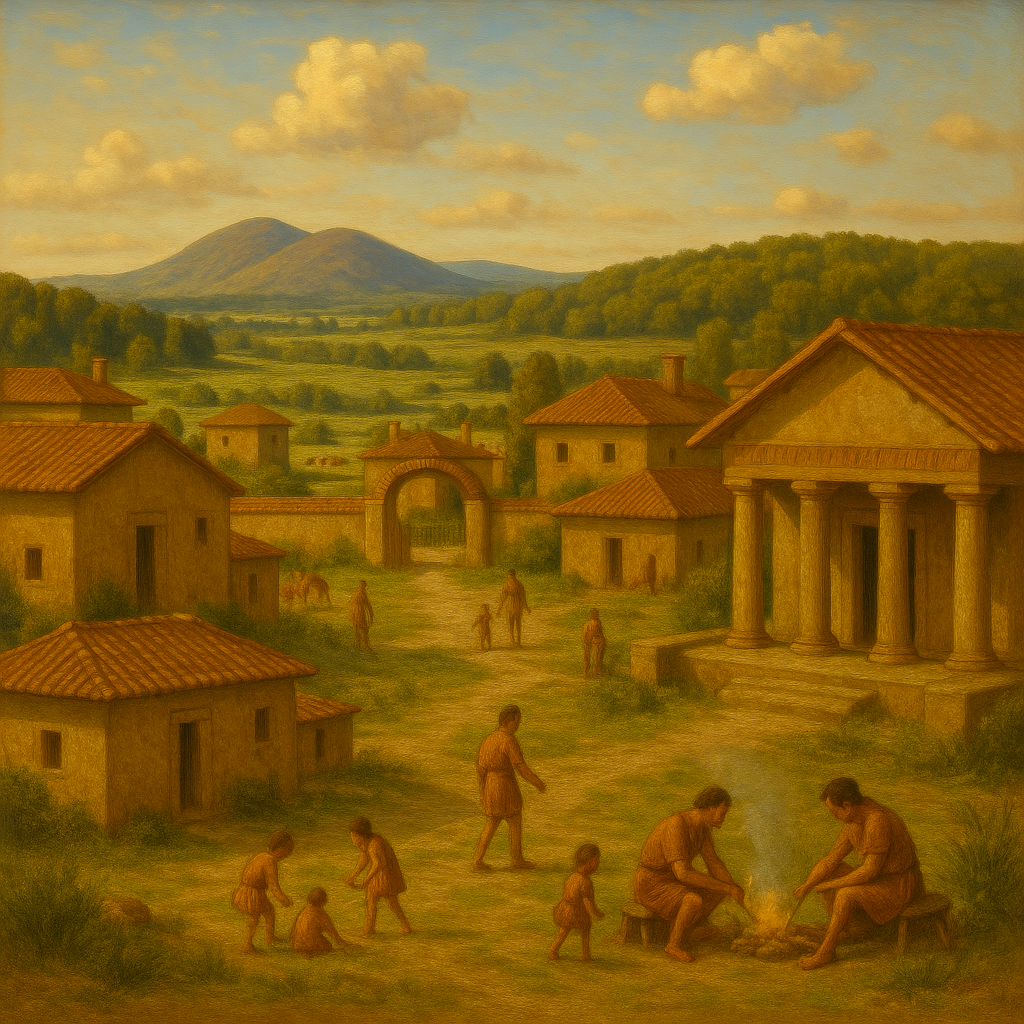
The Etruscan period left the most significant traces in the Sarteano area. Sarteano, under the influence of the powerful Etruscan city of Chiusi (Clusium), was intensively inhabited by the Etruscans from the 9th to the 1st century BCE. Small early villages arose on the highest hills—for example, near the necropolis of Sferracavalli, along the ancient route toward Radicofani. Over the centuries, the settlement expanded: in the 7th century BCE (Orientalizing period), the population concentrated in the area of Castiglioncello del Trinoro, where the vast necropolis of Solaia-Macchiapiana has been discovered.
This necropolis yielded numerous burials in canopic urns—cinerary urns with anthropomorphic lids—typical of this region, indicating the existence of a densely populated settlement as early as the late Orientalizing period. With the beginning of the Archaic period (6th century BCE), the settlement shifted to slightly lower hills (around 500 meters above sea level), probably to be closer to Chiusi, which was then at the height of its splendor under the legendary lucumo Porsenna.
As a result, the main necropolises of the 6th century BCE are located along the routes leading toward Chiusi—the ancient vie cupe carved into travertine rock. Two examples are the Necropolis of Palazzina and, above all, the Necropolis of Pianacce, situated just north of the present-day town center.
An Etruscan fresco in the “Tomb of the Infernal Chariot” (mid-4th century BCE), discovered in Sarteano, depicts the demon Charun driving a chariot pulled by lions and griffins toward the afterlife. This Pianacce necropolis—systematically excavated since 2000—has yielded extraordinary discoveries. Positioned panoramically overlooking the Val di Chiana and controlling a major north–south route between Orvieto and Arezzo, the Pianacce revealed a uniquely painted tomb: the renowned Tomb of the Infernal Chariot (dated to the second half of the 4th century BCE).
Inside the tomb, vivid-colored scenes are painted directly onto the travertine walls: a red-haired demon—identified as Charun, the Etruscan equivalent of Charon—drives a chariot pulled by two lions and two griffins, likely transporting the deceased to the realm of the dead.
Other images enrich the pictorial cycle: two male figures recline on a triclinium while banqueting, attended by a servant, and on another wall appear a large three-headed serpent and a hippocampus (a mythical sea-horse), guarding a sarcophagus.
These macabre and fantastical representations reflect the evolution of Etruscan conceptions of the afterlife during the 4th century BCE: a funerary world more unsettling and tormented compared to the serene visions of the Archaic age.
Next to the painted tomb, numerous other chamber tombs were discovered, dating between the late 6th and the 1st century BCE—evidence that the Pianacce necropolis was used for centuries by the local aristocracy.
Particularly interesting is a “theater-like” structure (similar to a small amphitheater) uncovered in 2007 in connection with three tombs: it is believed to have served for funerary rituals and ceremonies related to ancestor worship.
During the Hellenistic period (3rd–2nd century BCE), settlement in the Sarteano area became more widespread but scattered (a “leopard spot” pattern): alongside major sites, small rural nuclei with their own necropolises emerged. At Molin Canale, for example, several tombs from this period have been excavated and are now open to visitors.
Sarteano in the Roman Era
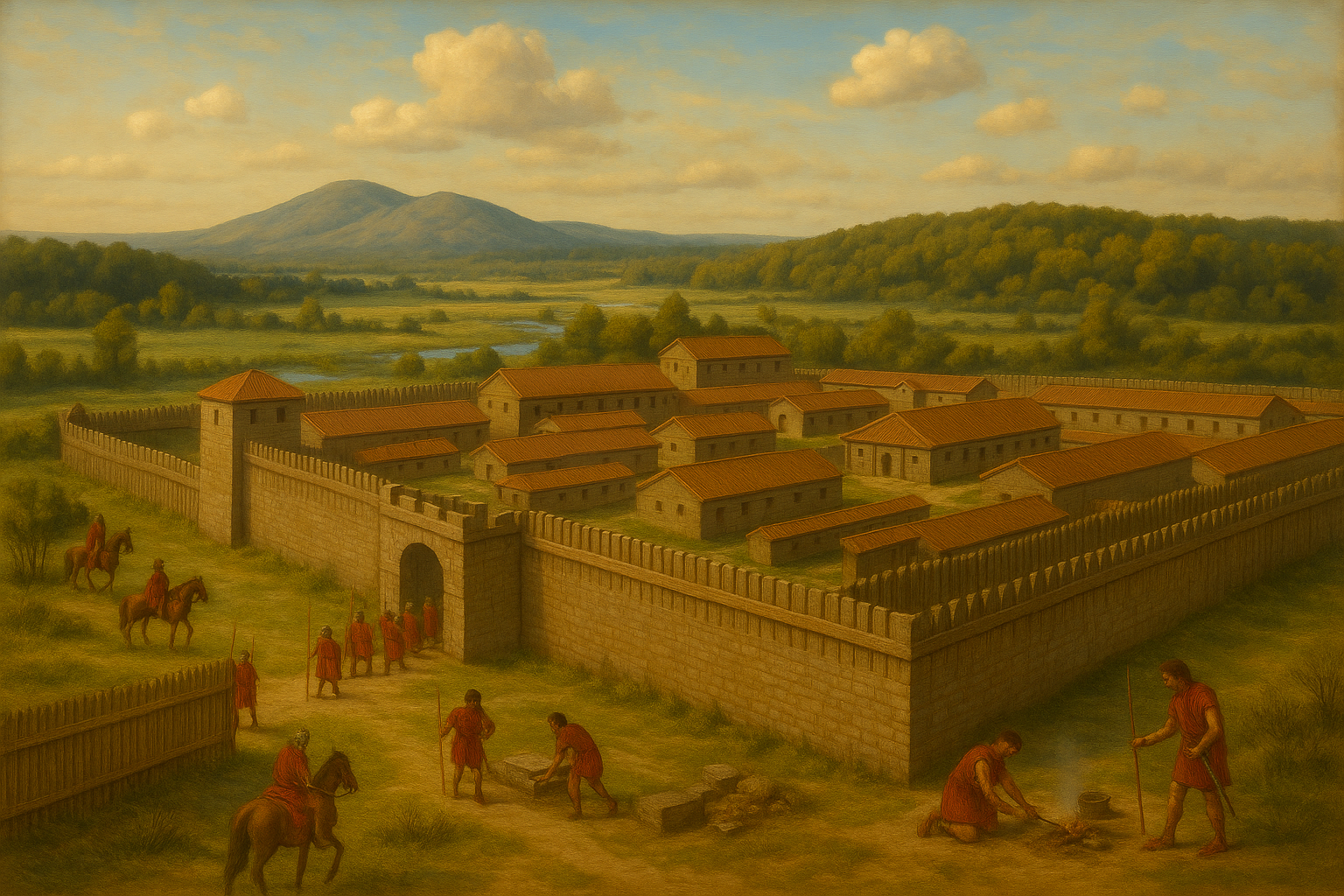
With Sarteano's integration into the Roman sphere (2nd–1st century BCE), the area was not abandoned—in fact, it maintained widespread occupation during the Roman era. Settlement continuity is confirmed both by the presence of rural communities and by the exploitation of local resources. For example, the Romans appreciated and used the area's thermal springs.
Evidence has emerged of at least two significant Roman settlements: one near the locality of Sant’Alberto and another in the broad area of Peschiera Giannini (just outside Sarteano). In these areas, remains of thermal buildings have been identified, belonging to villae rusticae (farm-villas) owned by wealthy landowners.
With Sarteano's integration into the Roman sphere (2nd–1st century BCE), the area was not abandoned—in fact, it maintained widespread occupation during the Roman era. Settlement continuity is confirmed both by the presence of rural communities and by the exploitation of local resources. For example, the Romans appreciated and used the area's thermal springs.
Evidence has emerged of at least two significant Roman settlements: one near the locality of Sant’Alberto and another in the broad area of Peschiera Giannini (just outside Sarteano). In these areas, remains of thermal buildings have been identified, belonging to villae rusticae (farm-villas) owned by wealthy landowners.
Both Etruscan and Roman artifacts have been found throughout the Sarteano area. For example, alongside Orientalizing-period canopic urns, bucchero wares, and painted ceramics (both Etruscan and imported Attic), objects from the Roman period have also been discovered—such as coins, tools, and architectural decorations.
Of particular importance are several cinerary statues in “pietra fetida” (a locally sourced limestone used for Etruscan funerary urns), unearthed in 2006 in the Sarteano area.
All of these materials—evidence of the succession of three civilizations (from the prehistoric Bronze Age to the Etruscans and then the Romans)—are now on display at the Sarteano Civic Archaeological Museum.
It is also worth noting the continuity of settlement throughout the ages: at the end of the Roman Empire, there is no indication of a break in human presence in Sarteano.
Some evidence suggests that the local community survived even during the early medieval period—for example, a Lombard tomb was discovered in the locality of Montarioso, and traces of early medieval activity were found near the Pianacce necropolis.
Later, the medieval settlement consolidated in the location of today’s town, around the acropolis where the castle would eventually rise—confirming a gradual and uninterrupted transition from the Roman era to the Middle Ages.
Fonti: Le informazioni sono basate su ricerche e scoperte archeologiche documentate dal Comune di Sarteano e dagli enti locali di tutela del patrimonio storico, nonché su studi pubblicati riguardo alla Tomba della Quadriga Infernale e alle necropoli etrusche di Sarteano.