The Ancient Valley of Clanis
Introduction
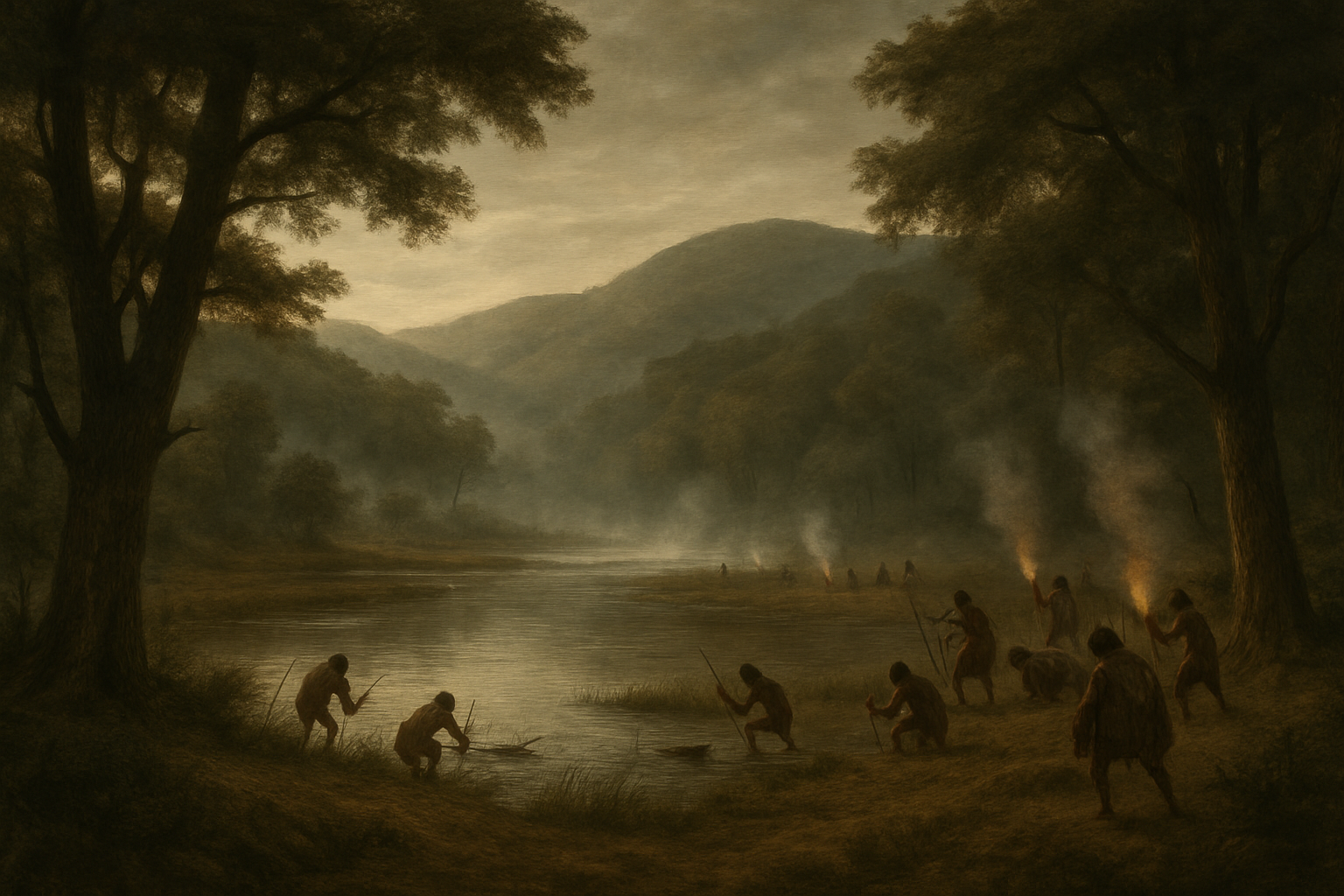
The Valley of the Clanis — known today as the Val di Chiana — is one of the most extraordinary and complex landscapes in central Italy. Once, it was a vast marshy plain crossed by the Clanis River, whose slow and abundant waters shaped the land, fostering a rich and unique ecosystem.
Already in Etruscan times, the valley was a vital resource: a natural corridor between the Arno plain and the Tiber Valley, as well as a cradle of biodiversity. Over the millennia, human presence profoundly transformed the landscape — first through ancient drainage works, and later through systematic interventions in the modern era, which turned the valley into one of the most fertile agricultural areas in Europe.
Today, the memory of the ancient riverine and marshy environment lives on in a few remaining wetlands, in small lakes such as those of Chiusi and Montepulciano, and in the extraordinary variety of flora and fauna that still inhabit the valley’s edges.
In this chapter, we will explore the natural history of the Valley of the Clanis — from the ancient watery plain to the modern rural landscapes, tracing millennia of natural evolution and human intervention.
The Clanis River was the lifeblood of the valley that bore its name. With its slow and winding course, the Clanis gathered waters from the surrounding hills and the Apennine mountains, creating a vast alluvial plain.
During the wetter seasons, the river would often overflow, creating wide marshy areas that nourished an extraordinarily rich ecosystem.
In ancient times, the Clanis was much more than a simple watercourse: it was a natural route of communication between Tuscany and Umbria, and indirectly between the Arno and Tiber basins. This connecting role made the Valley of the Clanis a privileged crossroads for peoples, goods, and cultures since prehistoric times.
From an environmental perspective, the waters of the Clanis supported exceptional biodiversity:
- vast reed beds,
- lowland forests of elms, oaks, and poplars,
- and a rich fauna of fish, water birds, amphibians, and large mammals that inhabited its muddy banks.
The natural vitality of the Clanis created a unique landscape of calm waters, grassy islets, and riverine forests, which for centuries shaped the daily life of the local populations.
The Ancient Clanis River and Its Natural Significance
Marshes, Rivers, Lakes, and Etruscan-Roman Water Systems
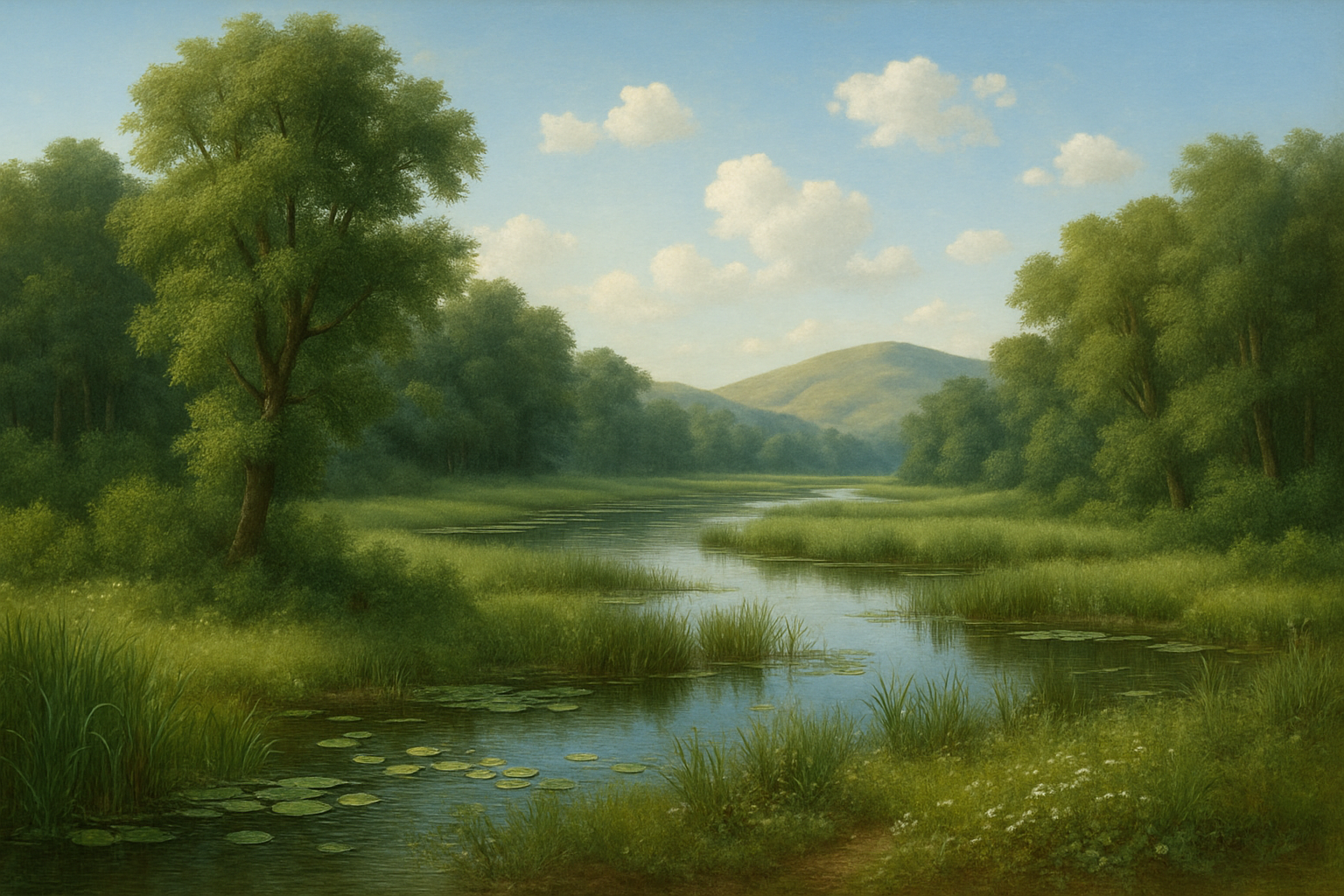
Before centuries of reclamation works radically transformed the landscape, the Valley of the Clanis appeared as a vast expanse of stagnant waters. Fed by numerous streams from the surrounding hills, the Clanis River flowed slowly southward, forming a complex network of marshes, ponds, and river branches. During the wetter seasons, the waters spread freely, flooding the plain and creating a wild and humid environment where the boundary between land and water was uncertain and ever-changing.
This watery mosaic fostered extraordinary biodiversity. Along the banks, vast reed beds, willow groves, and lowland forests dominated by poplars and elms thrived. In the lower areas, ponds and pools hosted a wide variety of fish, amphibians, and water birds, while muddy shores saw the passage of deer, wild boar, and other large mammals. The marshy nature of the landscape prevailed, making the valley one of the largest and most vital wetlands in ancient Italy.
Aware of the agricultural potential of this vast plain, the Etruscan civilization undertook efforts to tame the waters. The Etruscans, highly skilled hydraulic engineers, built canals and drainage systems that partially controlled flooding and made the higher lands cultivable. They dug artificial channels, constructed drainage ditches, and altered the course of some tributaries to manage water levels.
The Romans, who came later, perfected this skilled hydraulic management. They reinforced the banks, further regulated the course of the Clanis, and made certain stretches navigable, transforming the valley into a sort of trade artery that connected the Tuscan hinterland with the Tiber and, through it, with Rome. Nevertheless, the wild nature of the valley did not entirely disappear: it remained a borderland between water and earth, a witness to a fragile balance that would endure for many centuries.
The Biodiversity of the Ancient Valley: Marshland Fauna and Flora
In the ancient Valley of the Clanis, water reigned supreme over the landscape, and its presence gave rise to a rich and complex biodiversity. Where cultivated fields and orderly vineyards now stretch, there once lay vast expanses of reed beds, wet meadows, and water-loving forests, dotted with ponds and river branches.
Marsh plants dominated the scene. Expanses of common reed swayed in the wind, accompanied by dense rushes, cattails, and white willows growing along the calmer stretches of water. In slightly drier areas, lowland forests hosted field elms, sessile oaks, and black poplars, creating thick green curtains that reflected the changing seasons in the still waters.
The fauna found an ideal refuge in this environment. Flocks of grey herons, white storks, and mallards moved among the lakes and marshes, while the muddy shores were home to amphibians such as the green frog and the fire salamander. In the deeper, slower sections of the Clanis River, carp, pike, and tench swam — fish well adapted to living in calm, sediment-rich waters.
Among the denser vegetation, large mammals also found shelter. Wild boar, deer, and roe deer moved silently along the edges of the wet forests, while predators such as the Apennine wolf and the lynx watched over the invisible boundaries of this realm of water and land.
In this marshy valley, every natural element was deeply interconnected: the water sustained the plants, the plants sheltered the fauna, and the fauna, in turn, contributed to aintaining the balance. It was a fragile world, shaped by the changing seasons, where life followed the slow and majestic rhythm of the Clanis waters.
Environmental Changes
Etruscan, Roman, Medieval, and Medicean Reclamations
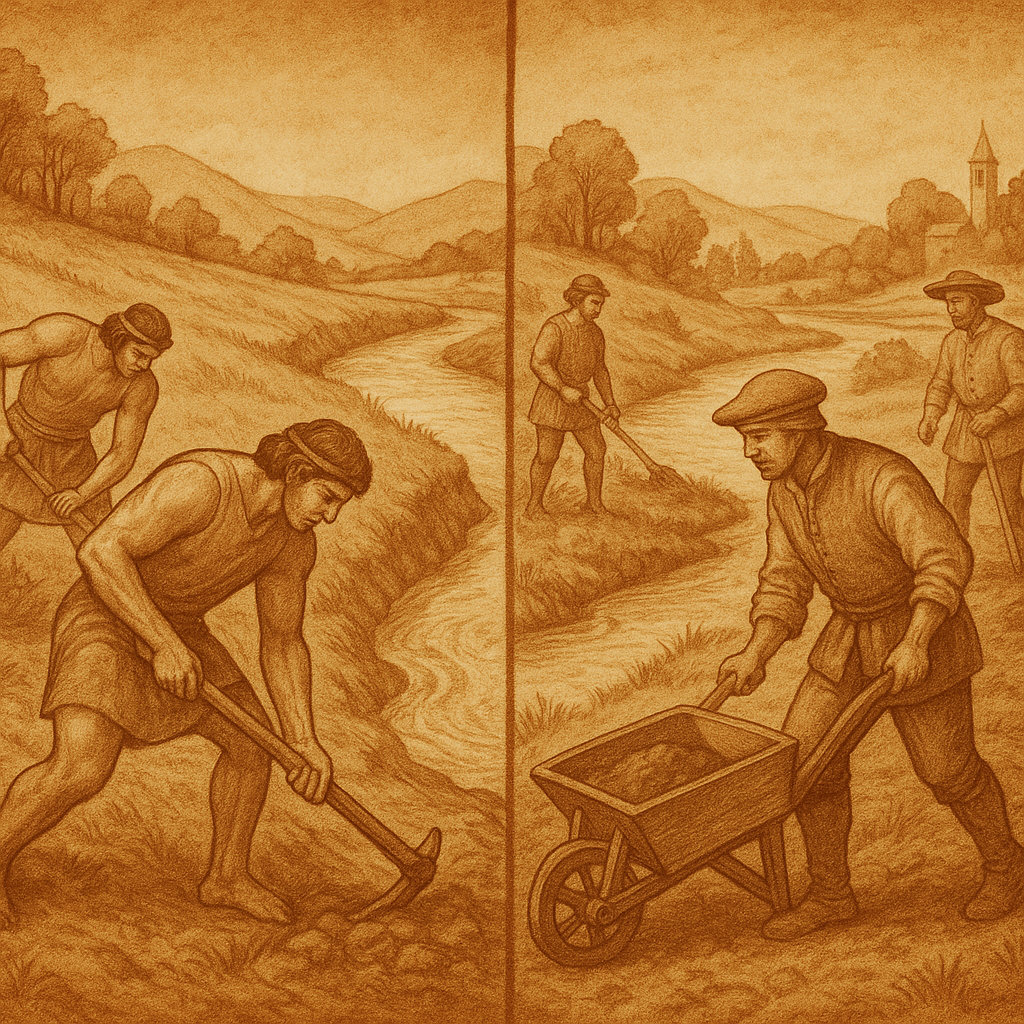
The landscape of the Valley of the Clanis did not remain unchanged. Since ancient times, the peoples who inhabited these lands understood both the value and the danger of its waters. The first to attempt to tame the river were the Etruscans, extraordinary natural engineers. Through the construction of drainage canals, water regulation works, and controlled diversions, they sought to reclaim portions of fertile land from the marsh without disrupting the overall balance of the valley. The Clanis remained a central element, though it became increasingly regulated over time.
With the advent of Roman rule, the approach to the valley changed radically. The Romans, pragmatic and refined technicians, envisioned an even more systematic management of the land. They reclaimed large portions of terrain, controlled the tributaries, and designed navigable waterways, useful not only for trade but also for territorial control. The valley became a vast agricultural and productive basin, linked through the Clanis and Paglia rivers to the Tiber’s river system. However, even the Roman balance had its limits: unstable waters and soil erosion remained a constant threat.
During the Middle Ages, with the decline of Roman infrastructure, the environmental situation of the Valley of the Clanis deteriorated. The canals silted up, the embankments collapsed, and much of the valley once again became dominated by marshes and ponds. Only from the Late Middle Ages, with the rise of the first Benedictine monastic communities, were new, small-scale and fragmented hydraulic interventions attempted — aimed more at protecting individual settlements than transforming the entire ecosystem.
The definitive turning point came with the Renaissance and the era of Medicean reclamation works. The Grand Dukes of Tuscany, starting with Cosimo I de' Medici, promoted a modern vision of land management: large-scale drainage projects, the construction of master canals, and the diversion of waters toward the Arno River.
Between the 16th and 18th centuries, the Valley of the Clanis was gradually transformed from a marsh into a fertile agricultural plain, in one of the most ambitious reclamation projects of modern Europe.
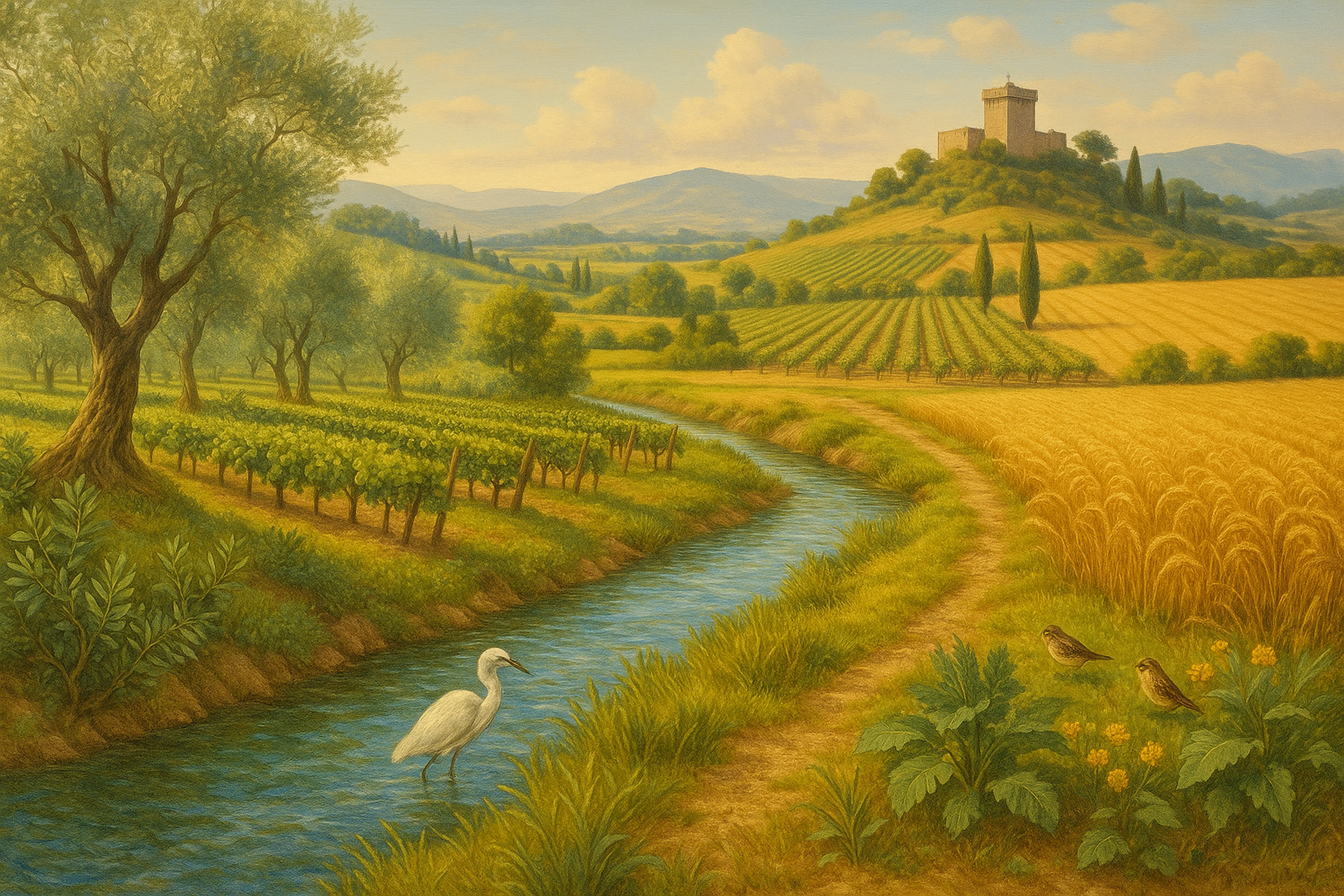
These reclamation works did more than just eliminate the marshes — they forever changed the valley’s natural identity. Where water and reed beds once prevailed, cultivated fields, vineyards, olive groves, and roads emerged, shaping the face of the Val di Chiana up to the present day.
The Transformation of the Valley: From Marshland to Agricultural Countryside
The transformation of the Valley of the Clanis from a vast marshy plain into a flourishing agricultural countryside was a long and complex process. It unfolded over centuries, altering not only the landscape but also the relationship between humans and the land. For millennia, the populations inhabiting the valley had to coexist with water — a friend that brought life and fertility, but also a foe that flooded fields, threatened villages, and spread disease.
With the modern era, and especially with the great Medicean reclamation works, the balance changed radically. The ancient Clanis River was gradually tamed: its course was interrupted and diverted, its waters channeled toward the Arno, far from the heart of the valley. Master canals and drainage ditches divided the plain into large, regular plots, drawing a new geography of straight lines, geometric boundaries, and open fields.
The marsh, which had dominated the landscape for centuries, was slowly drained. Where ephemeral lakes and shifting ponds once stretched, orderly crops began to grow: wheat, corn, sunflowers, vines, and olive trees became the new protagonists of the valley. Lowland forests shrank, reed beds almost entirely disappeared, replaced by rows of poplars and white roads that cut across the horizon.
The agricultural countryside that emerged was not just a physical landscape; it was also the result of a new way of thinking about nature. The valley was now seen as a productive machine, to be regulated, cultivated, and systematically exploited.
Yet, despite the profound transformation, indelible traces remained in the places where water had long reigned: in the dampness of the soil, in the bends of the ditches, and in the reflections of the surviving lakes — living memories of a past when the Valley of the Clanis was still the undisputed realm of water.
Current Ecosystems
Remaining Wetlands
Despite the vast transformation carried out over the centuries, the Valley of the Clanis still preserves fragments of its ancient watery and marshy past. Amid cultivated fields and orderly vineyards, a few but precious remaining wetlands survive — true islands of biodiversity that keep alive the memory of a vanished landscape.
The clearest witnesses of this legacy are the small lakes that remain in the southern part of the valley: Lake Chiusi and Lake Montepulciano. These bodies of water, much reduced from their ancient size, represent what is left of the vast marshes that once dominated the plain. Around them, environments still rich in life have developed — reed beds, wet woodlands, and flooded meadows that host a surprising variety of species.
The Montepulciano Lake Nature Reserve, established to protect this fragile ecosystem, safeguards an extraordinary wealth of flora and fauna. Herons, marsh harriers, grebes, and wild ducks find refuge among the calm waters, while the shores are lined with white willows, trembling poplars, and dense reed beds swaying in the wind.
Even along the remaining stretches of ancient ditches and canals, especially in less intensively cultivated areas, small natural enclaves persist: temporary ponds, riparian groves, and freshwater pools where life resurfaces every spring.
These wetlands, though fragmented, are essential not only as reservoirs of biodiversity but also as valuable indicators of the valley’s environmental history. They preserve the deep memory of a time when the Valley of the Clanis was a green and blue sea, vibrant with voices and shimmering with reflections of water — a world now surviving only in a few quiet corners.
Cultivated Countryside: Historic and Modern Crops
With the draining of the waters and the gradual reclamation of the plain, the Valley of the Clanis changed its face: from a world of water and marshes, it was transformed into a vast cultivated countryside, shaped according to the designs of agricultural rationality.
In the first centuries following the great reclamation works, the most widespread crops were those typical of traditional Tuscan agriculture. Wheat occupied large areas, followed by rye, barley, and spelt. These crops adapted well to the reclaimed soils — fertile yet still young — and ensured the sustenance of local communities.
Alongside cereals, the cultivation of vines and olive trees also flourished, expanding mainly across the hills surrounding the plain. This shaped the iconic terraced landscapes that still define the heart of Tuscany today.
As the centuries passed, the countryside of the Val di Chiana became even more diversified. During the 19th and 20th centuries, the introduction of crops such as corn and sugar beet enriched the agricultural mosaic, accompanied by the gradual modernization of farming techniques. Corn, in particular, found an ideal environment in the valley thanks to the abundance of water and the quality of the silty soils, becoming one of the pillars of local agricultural production.
Today, the Valley of the Clanis appears as a vast and colorful agricultural tapestry, where fields of wheat and corn alternate with orderly vineyards, centuries-old olive groves, and expanses of sunflowers that paint the horizon gold in summer.
Modern crops coexist with the legacies of the past: ancient farmhouses, white roads, rows of cypress trees, and ditches that still follow the patterns set by ancient canal systems.
The cultivated countryside has become the visible soul of the valley, yet beneath its surface — invisible to the eye — still beats the deep pulse of a land that was once all water, wind, and silence.
Flora and Fauna Today
Typical Species of the Valley
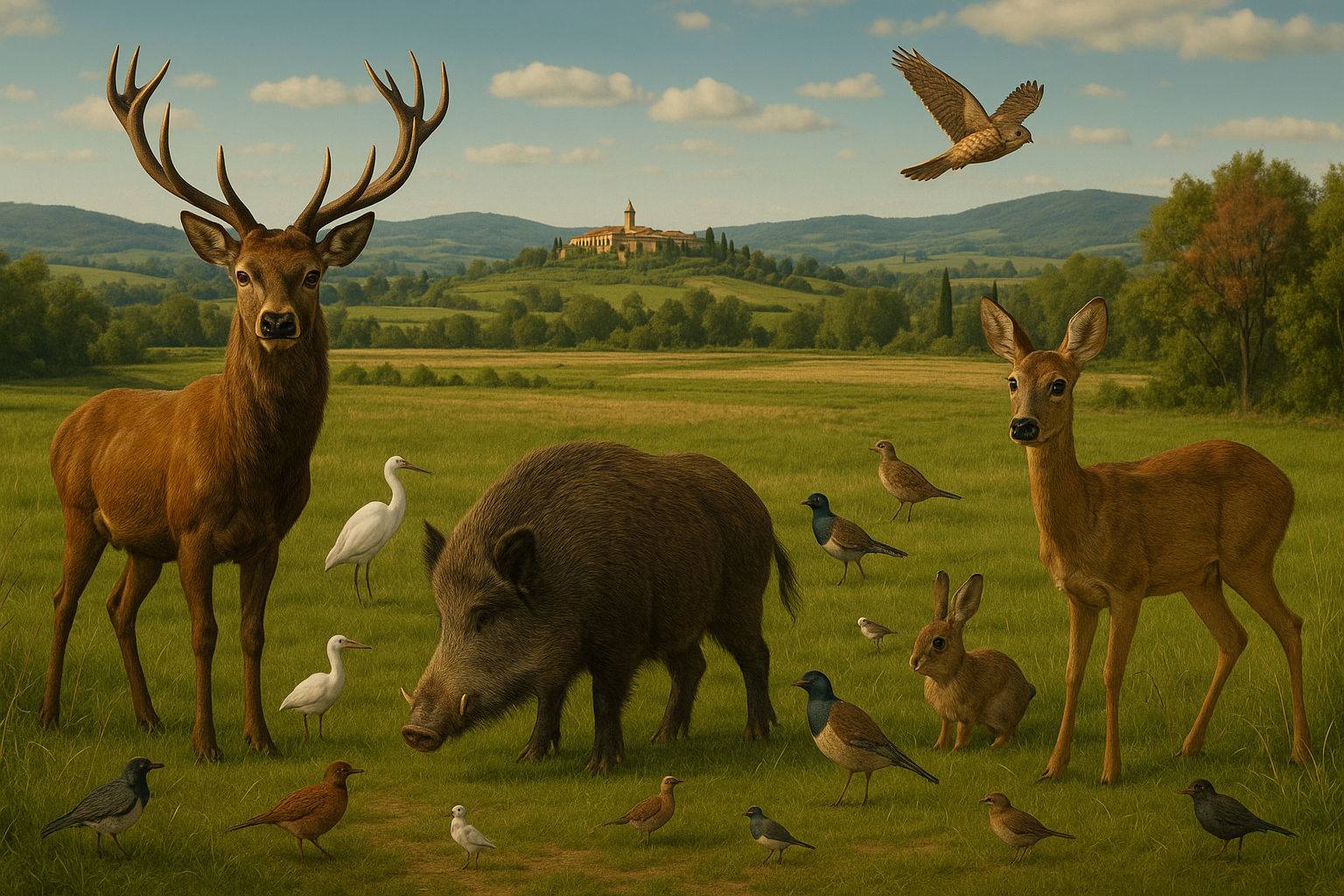
Today, walking through the Valley of the Clanis, one can still notice the subtle signs of nature that endures and adapts. Although the agricultural landscape has profoundly transformed the valley’s original appearance, the flora and fauna typical of wetlands and lowland forests still survive — hidden among the fields, along the ditches, and near the remaining lakes.
Among the trees, oaks and field elms — ancient inhabitants of the plain — prevail, offering shelter and shade along the canal banks and in the few remaining patches of woodland. Alongside them stand the poplars, with their light crowns that tremble at the slightest breeze, silent witnesses to the deep bond between land and water that has shaped the valley for millennia.
The remaining wetlands and lake shores host a variety of birds that reflect the vitality of the ecosystem. Grey herons, with their majestic flight and long, elegant legs, move through the reed beds in search of prey. It is not uncommon to spot a white stork as well — graceful and solemn — resting among the fields or flying slowly above the rooftops of ancient farmhouses. The presence of amphibians such as the green frog and the fire salamander is a sign of the health of the remaining waters: these creatures, as ancient as the valley itself, continue to live among the ponds and ditches scattered throughout the countryside.
Despite the profound changes, the Valley of the Clanis still preserves a vibrant natural soul, made up of sounds, colors, and subtle movements. It is a hidden world, unnoticed by hurried eyes, that reveals itself only to those who know how to observe patiently: the gentle rustle of reeds, the sudden leap of a frog among the grass, the silvery reflection of a heron flying at sunset.
Rare and Protected Species
Hidden among the quiet folds of the modern Valley of the Clanis, a few extraordinary presences still remain — fragile heirs of an ancient world that agricultural transformation has not entirely erased. These are rare species, protected for their ecological and symbolic value, standing as witnesses of a natural past that still endures, though with difficulty.
In the remaining wetlands, among the reed beds and calm waters of Lake Chiusi and Lake Montepulciano, populations of little bitterns and purple herons still survive. These elusive birds, difficult to spot, require extremely stable and protected environments. Their low and silent flight over the marshes is the most delicate sign of the hidden vitality of the valley.
Alongside them, in certain seasons, the majestic black stork also returns — an even rarer species than its white cousin, preferring the quieter and more untamed corners, far from the noises of the cultivated countryside.
Among the amphibians, the presence of the Italian crested newt is particularly significant — a threatened species that finds refuge in the small ponds and humid ditches that have survived the rationalization of the landscape. Its presence indicates environments that are still healthy, where the water maintains sufficient quality and continuity to support the delicate stages of amphibian life.
Precious signs also emerge among the plants. In the most inaccessible corners, ancient specimens of sessile oaks and field elms have survived the major reclamation works and modern agriculture, now considered natural monuments. In some wet areas, rare varieties of wild orchids can still be found — tiny yet priceless flowers that adorn the wet meadows in spring.
These presences, invisible to most passersby, represent the hidden heart of the Valley of the Clanis. To preserve them means not only to protect individual species, but also to safeguard the deep memory of a millennia-old landscape and to keep alive, for the future, the echo of a valley that was once almost entirely made of water, wind, and wild life.
Environmental Issues and Conservation
Urbanization, Landscape Fragmentation, Climate Change
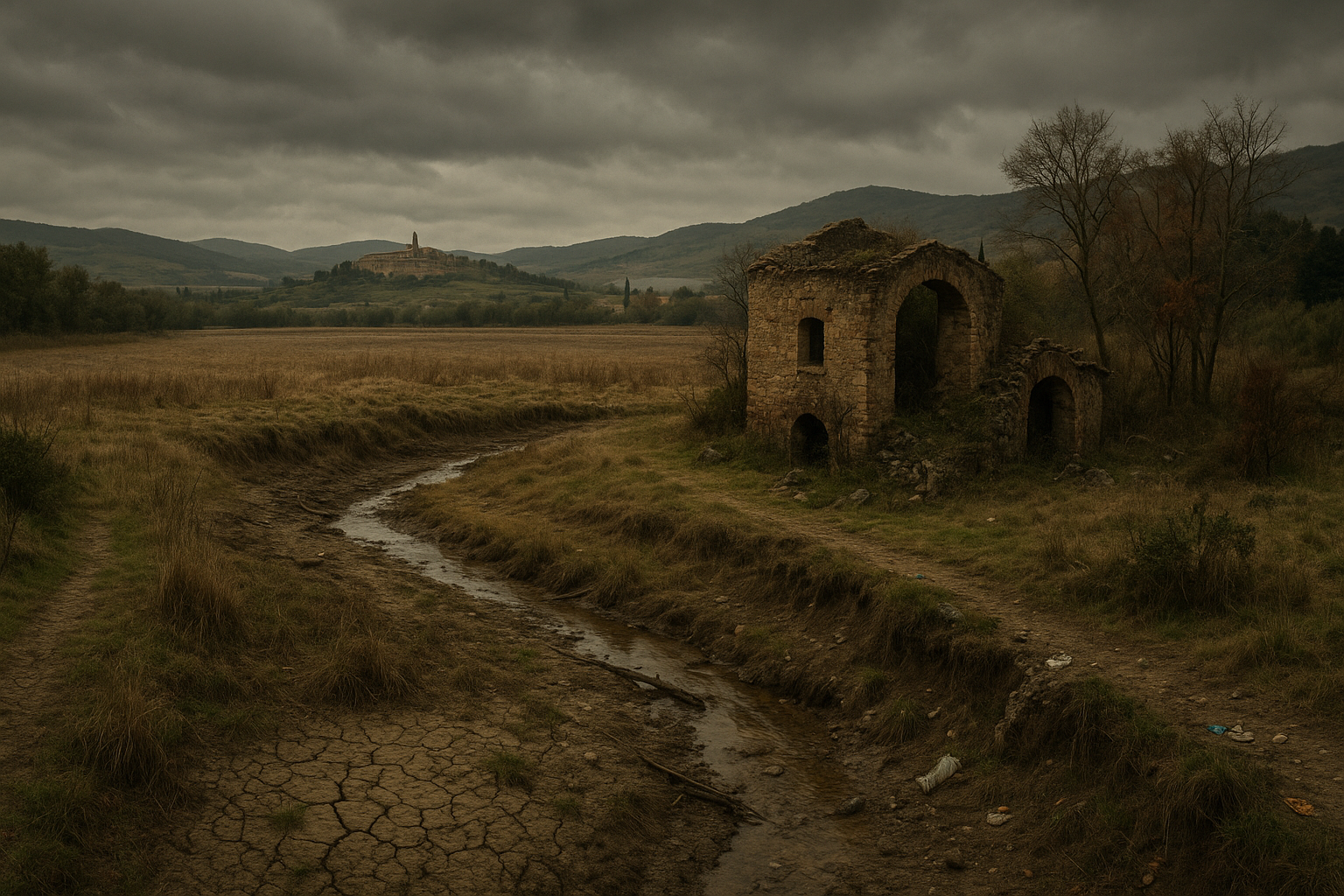
Despite the ancient charm that the Valley of the Clanis still evokes today, its natural environment faces deep and complex challenges. The landscape, once dominated by water, trees, and birdsong, is now fragmented — partly compromised by the relentless advance of modern transformations.
Urbanization represents one of the main threats. Rapidly growing settlements, road infrastructure, industrial facilities, and artisanal areas have reshaped large portions of the valley. The ancient connections between the various natural environments have been broken, and many areas that once served as ecological corridors for animal species are now artificial barriers, difficult for wildlife to cross.
Added to this pressure is the fragmentation of the agricultural landscape.The gradual mechanization of agriculture has encouraged the creation of increasingly large and uniform fields, drastically reducing the presence of hedgerows, natural ditches, small woodlands, and refuge areas for animals.The variety of habitats that once characterized the valley has diminished, and with it, biodiversity has declined.
Finally, climate change is already leaving its mark. Longer, drier summers, brief and violent rains, and rising average temperatures threaten the stability of the remaining ecosystems. Wetlands, already reduced to marginal remnants, suffer from more frequent droughts and a progressive lowering of the water table. Animal and plant species, accustomed to more humid and stable conditions, now face changes that are too rapid for them to naturally adapt.
Despite these challenges, conservation and restoration projects are multiplying throughout the Valley of the Clanis. Nature reserves, renaturalization programs for ditches, sustainable agriculture initiatives, and wetland restoration projects all show that awareness of the value of this natural heritage is still very much alive.
To protect the valley today means saving not only a habitat rich in life, but also a fundamental piece of the historical and cultural memory of central Italy.
Biodiversity Conservation Projects
In the face of the profound transformations that have reshaped the Valley of the Clanis, a new awareness has emerged in recent decades: the need to protect what remains of the ancient natural landscape and, where possible, to restore the lost balance.
The first concrete steps were taken through the creation of protected areas and nature reserves, such as the Montepulciano Lake Nature Reserve, established to preserve one of the valley’s last significant wetland environments.
Here, the aim has been not only to conserve the typical fauna and flora, but also to recreate, through targeted interventions, the environmental conditions that allow the return of rare and threatened species.
At the same time, projects have been launched to renaturalize smaller watercourses and historic ditches, through the restoration of natural stretches, the planting of native trees along the riverbanks, and the re-establishment of field hedgerows, essential as ecological corridors for wildlife.
Another area of intervention concerns sustainable agriculture. In some parts of the valley, farms and local cooperatives have joined organic production and integrated farming programs, practices that reduce the chemical impact on soils and waters, promoting the protection of remaining habitats.
Equally important is the environmental education initiative. Through visitor centers, educational trails, and awareness-raising activities, the goal is to bring local residents and visitors closer to understanding the natural heritage of the Valley of the Clanis. Because protecting a territory means not only defending species, but also telling the story and fostering love for the landscape, reactivating an ancient bond between humans and the environment that surrounds them.
These projects, despite countless difficulties, testify that the future of the Valley of the Clanis is not yet written. In the invisible weave of its remaining waters, in the silent wings of the herons, in the golden reflections of the fields, the possibility of a balance between memory, nature, and modernity still survives.
Conclusion
The Valley of the Clanis is much more than a geographical area: it is a living memory, a millennia-old story carved by water, wind, and the hand of man. In every ditch, in every lake, in every fold of the cultivated countryside, the echo of a past where water dominated the plain and nature set its own boundaries without constraints still survives.
Preserving the environmental memory of this valley means safeguarding not only biodiversity but also the deep history of the relationship between humans and the environment, built over centuries of adaptation, respect, and transformation.
It is an invitation to read the landscape not only as a space to be used, but as an open book where every tree, every reed bed, every flight of a heron tells a part of our own cultural heritage.
In an era of rapid change and increasing pressures on the environment, the Valley of the Clanis teaches us the value of resilience and coexistence.
Protecting what remains of its wetlands, ecosystems, and waterways means not only defending nature but also keeping alive a vision of the world where humans and the landscape are not adversaries, but parts of the same ancient breath.
In every act of protection, in every restoration project, the ancient soul of the Clanis is revived, still shaping the valley’s destiny today, invisible yet ever-present.